
← Articles · Feb 28, 2025
Sheet Metal Forming Simulation: Optimization and Cost Reduction in Manufacturing
Introduction
In the manufacturing industry, efficiency and cost reduction are key factors for success. Sheet forming simulation is an innovative technology that allows for predicting and optimizing manufacturing processes before actual production. By virtually representing each stage of the process, companies can identify potential defects, reduce waste, and improve part quality without the need for costly physical testing.
In this article, we will explore a sheet metal forming simulation process, explaining each of its stages.
Benefits of Simulation in Industry
- Cost reduction: Less physical testing and tooling adjustments.
- Process Optimization: Early identification of problems to improve efficiency.
- Quality improvement: Reduction of defects such as fractures, wrinkles and dimensional deviations.
- Shorter development time: Acceleration in design validation and less rework in the workshop.
The Forming System
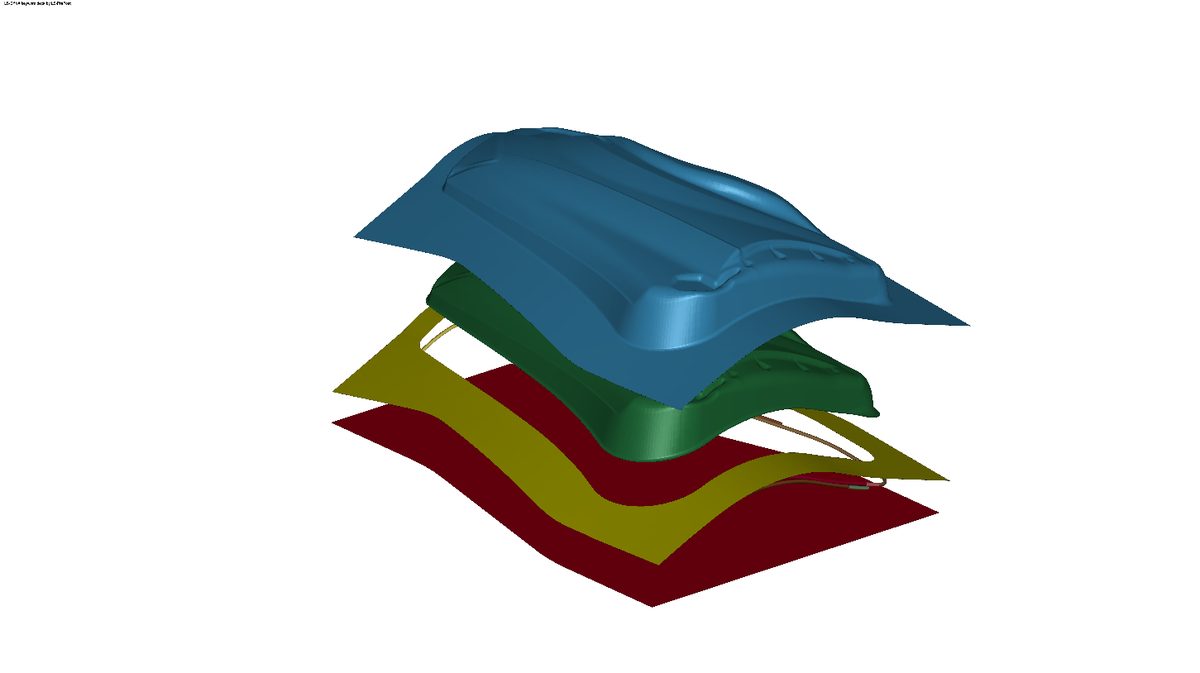
The sheet metal forming process is carried out using a set of tools specifically designed to transform a flat sheet into a part with a defined geometry. In the following example, the system is composed of the following elements:
- Die: This is the upper component of the tooling and defines the final shape of the part. It is the tool that applies pressure on the sheet to deform it and adjust it to the shape of the punch.
- Punch: This is the lower tool and acts as a support for the sheet during the forming process.
- Hold-down plate: Its main function is to hold the sheet and control its flow during forming, avoiding defects such as wrinkles or undesirable deformations.
- Sheet or blank : This is the raw material of the process. It is generally a flat metal sheet that will be transformed into a piece with the desired geometry.
Stages of Sheet Metal Forming Simulation
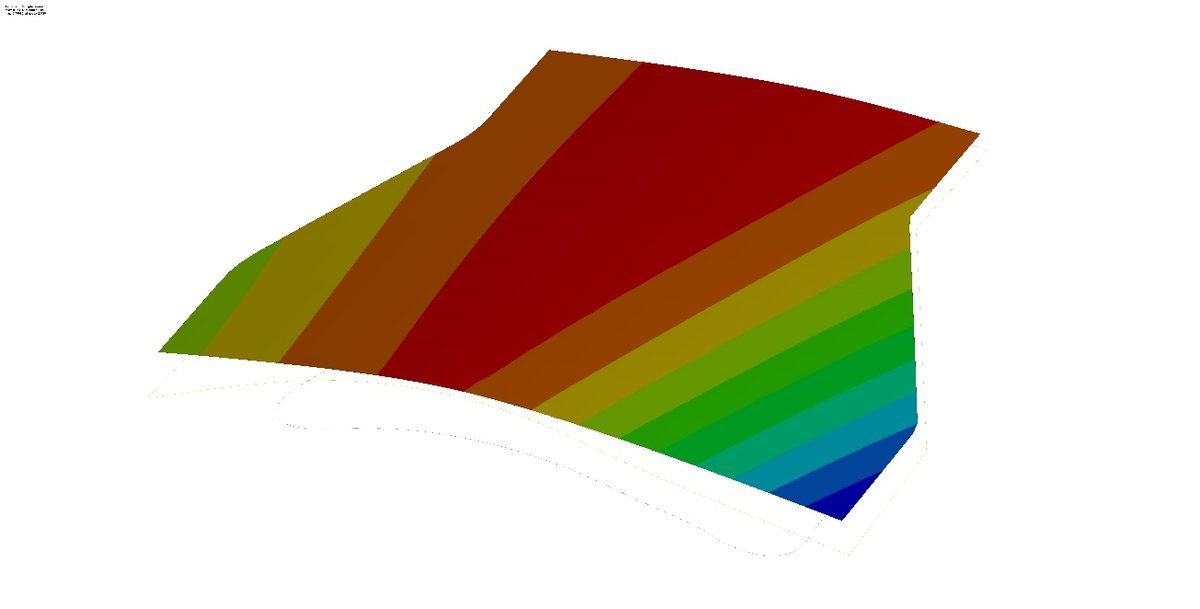
1. Gravity (Gravity Placement)
In this initial phase, the metal sheet is positioned within the tooling under the action of gravity. Simulation makes it possible to verify that the positioning is correct and to avoid excessive displacements before the forming process begins.
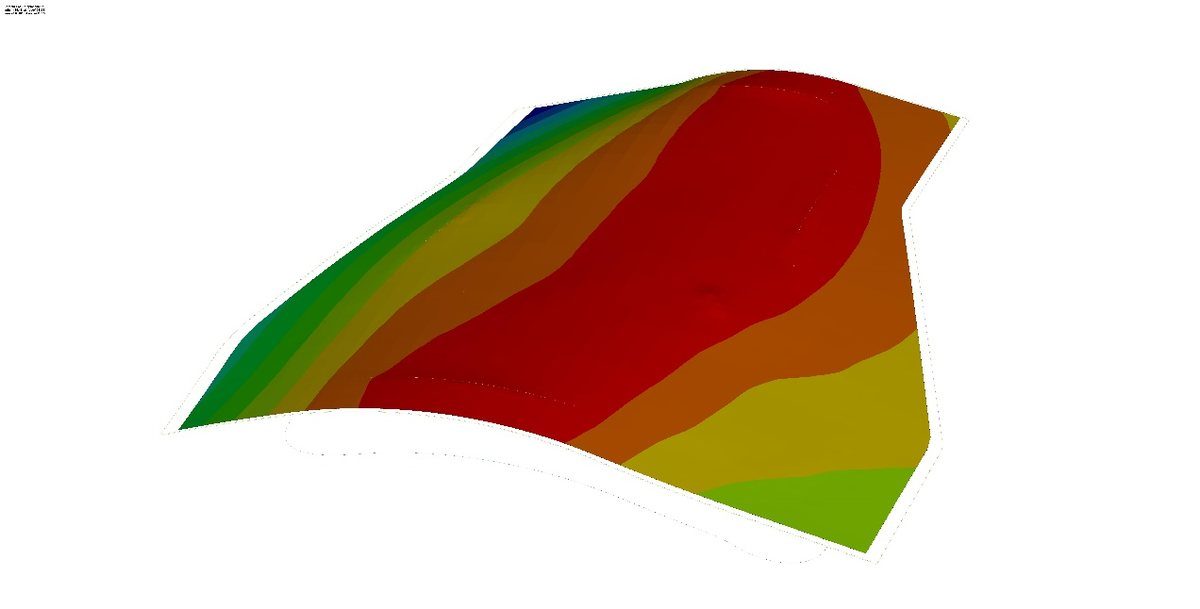
2. Closing (Tooling Closure)
The upper tools, die and hold-down, close on the sheet to start forming. This phase ensures that the piece is correctly aligned and held, avoiding unwanted movements that could affect the final quality.
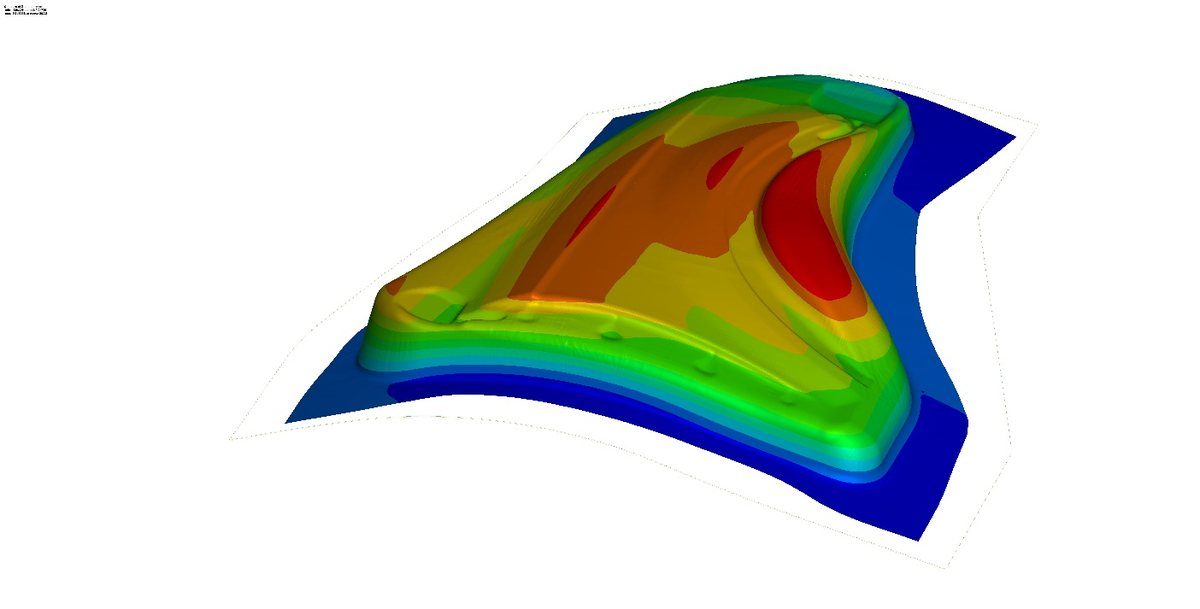
3. Forming (Part Forming)
At this stage, the die and the hold-down plate are moved vertically, applying a load to the sheet to give it its final shape. Simulation helps to detect possible defects, such as wrinkles or fractures, and allows adjustments to be made to the design and process parameters before actual manufacturing.
4. Trimming (Excess Trimming)
Once formed, the part undergoes a trimming process to remove excess material. Trimming simulation allows the edge quality to be assessed and problems such as burrs or deformations to be anticipated.
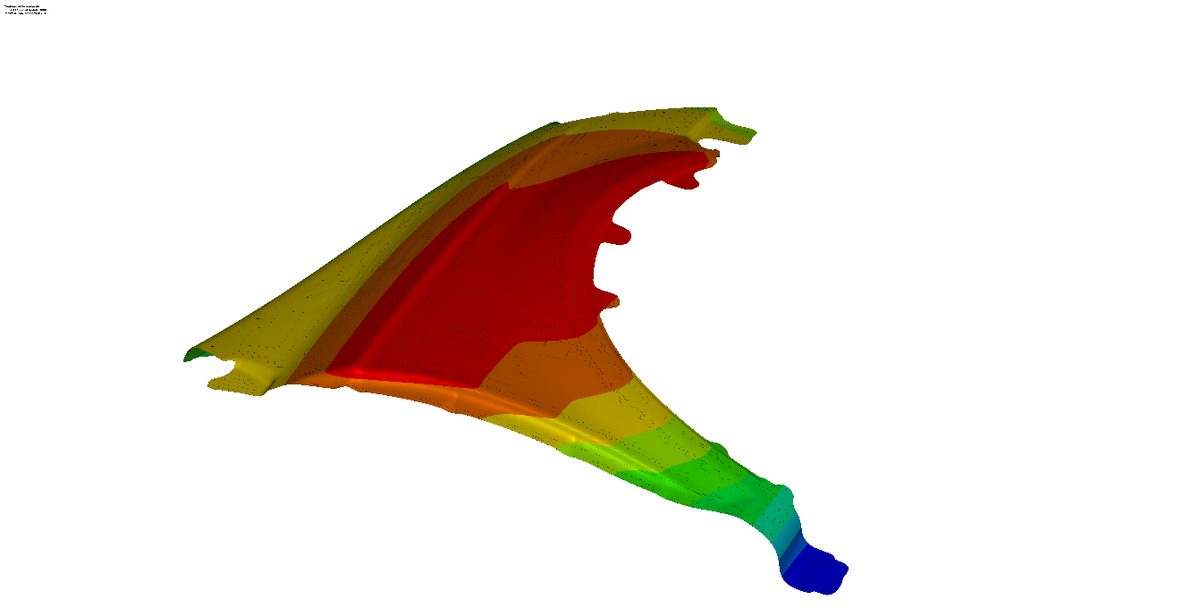
5. Springback (Elastic Return)
When the applied pressure is released, the sheet tends to recover part of its original shape due to the elasticity of the material. This phase makes it possible to anticipate dimensional deviations and apply compensations in the design to achieve precise measurements.
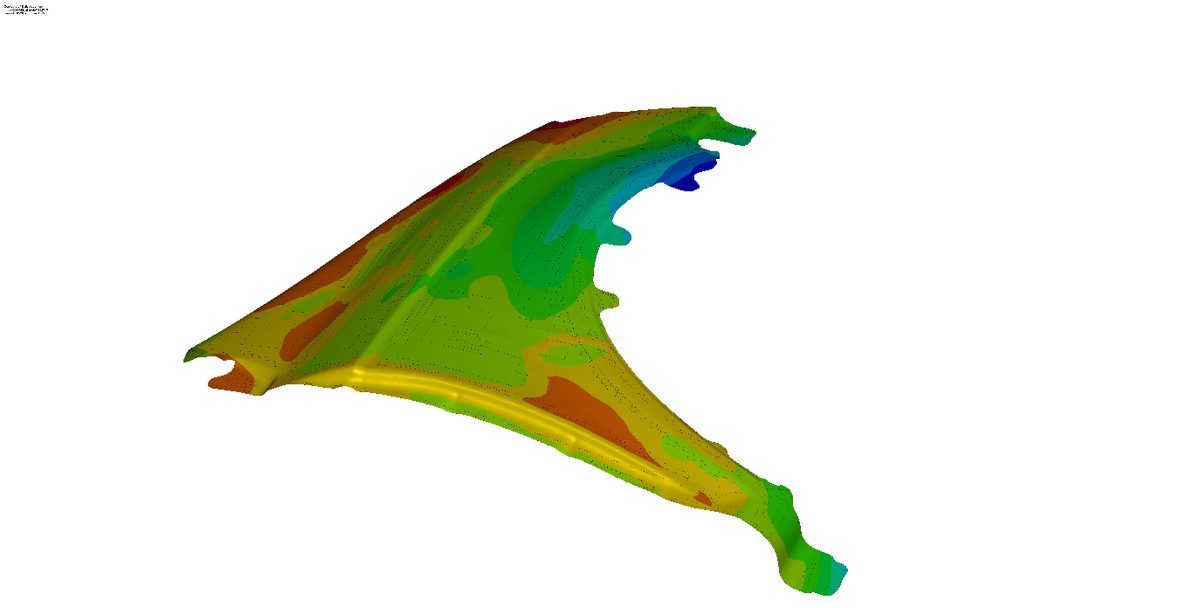
6. Tipping (Tipping Adjustment)
In some cases, the part must be accommodated within the tooling to ensure proper alignment in the next operation. Simulation of this phase allows determining the best method for making adjustments without compromising the geometry of the part.
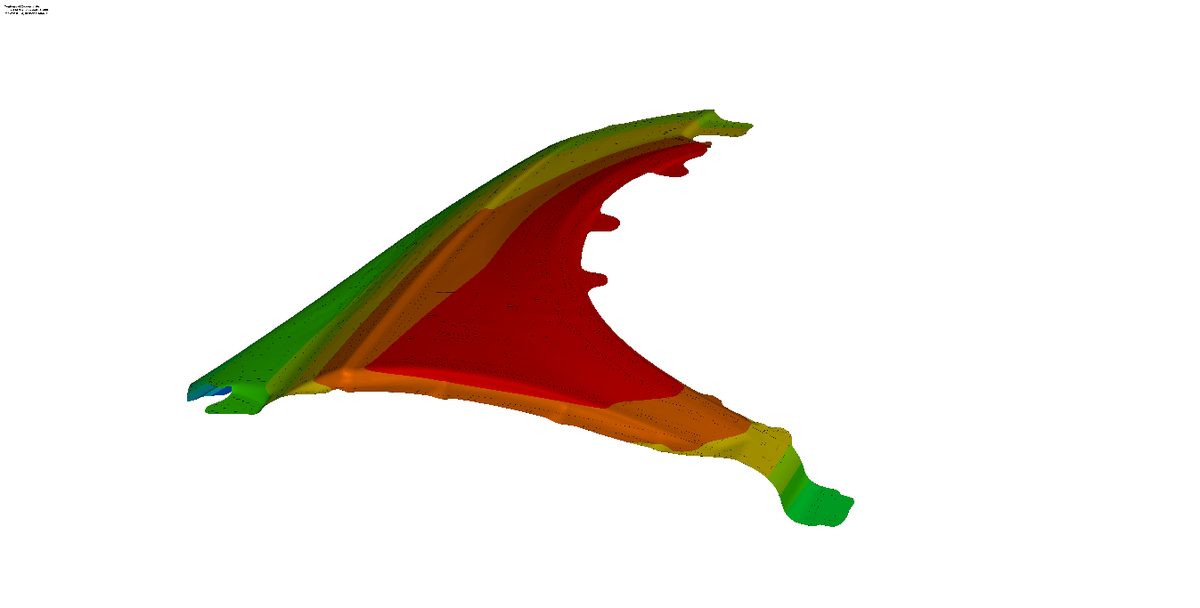
7. Flanging (Flange Bending)
If the part requires folded edges, this phase analyses the stresses generated and predicts possible defects, such as cracks or inaccuracies in the bending angle. Thanks to simulation, it is possible to optimise the parameters to avoid these problems.
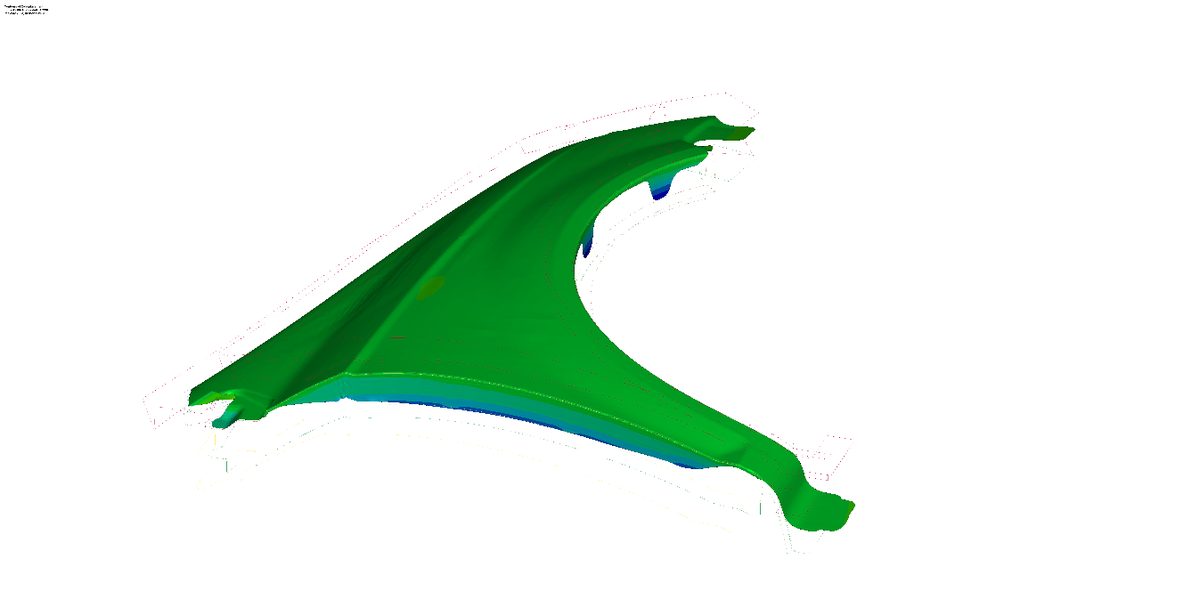
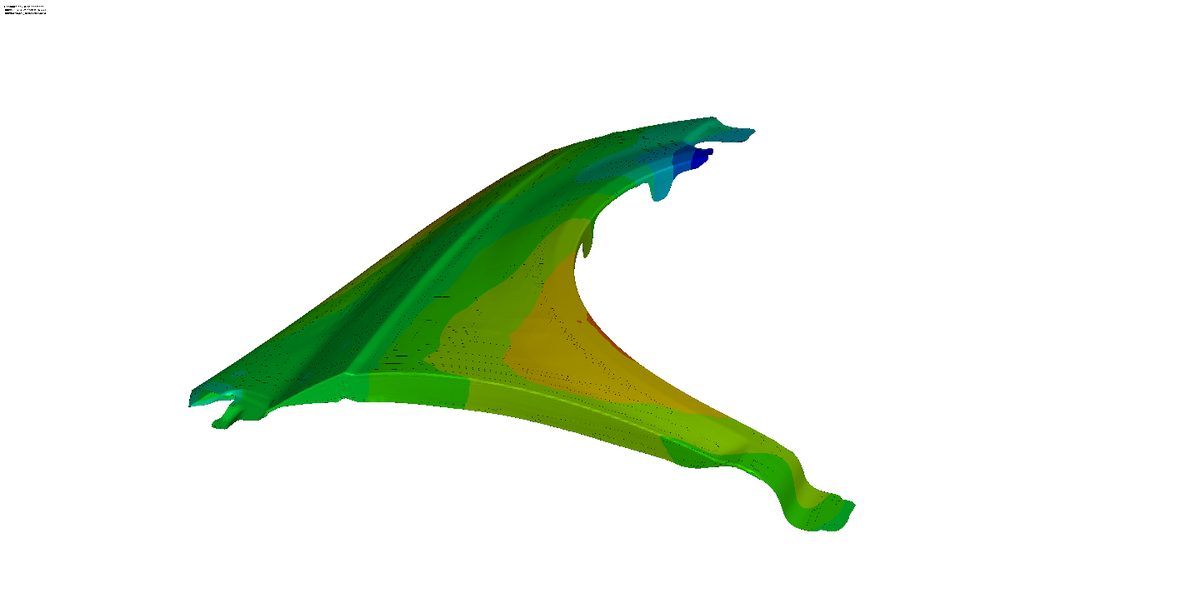
8. Springback (Second Elastic Return)
After flange forming, a second springback analysis is performed to account for additional deviations. This allows adjustments to be made to tool and process design to ensure the final part has the correct shape and dimensions.
Conclusion
Sheet metal forming simulation is an essential tool for optimizing manufacturing processes and reducing costs. By digitally representing each stage of the process, companies can anticipate problems, make improvements, and obtain higher quality products without wasting materials or resources. Implementing this technology not only improves efficiency, but also allows companies to remain competitive in an ever-evolving market.